
A Practical Guide to Eating Safely and Staying Healthy
In today’s world, food is no longer just about taste or convenience. Processed products, food additives, pesticides, and poor storage conditions can all affect our health. Many people are asking the same question: how can we protect ourselves through the food we eat today?
The good news is that with the right food choices and simple habits, it’s possible to reduce risks and protect your health naturally.
Why Food Safety Matters More Than Ever
What we eat directly impacts:
- the immune system
- digestion
- blood pressure
- inflammation
- long-term health
The main modern food risks include:
- ultra-processed foods
- excessive sugar and salt
- chemical residues
- poor food handling and storage
👉 Protecting your health starts on your plate.
Choose Safer and More Natural Foods
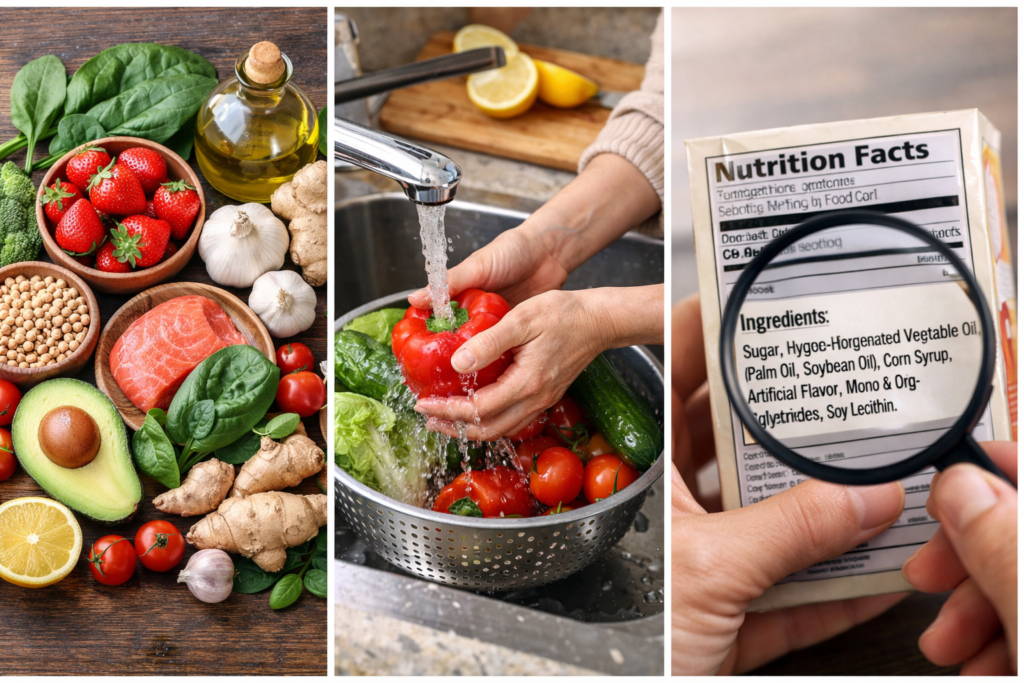
Focus on whole, unprocessed foods
The closer food is to its natural state, the safer it usually is:
- fresh vegetables
- whole fruits
- whole grains
- legumes
- fresh fish, eggs, and unprocessed meat
A simple rule:
👉 The shorter the ingredient list, the better.
Limit ultra-processed foods
Try to reduce:
- ready-made meals
- sugary drinks
- packaged snacks
- industrial cold cuts
These foods often contain:
- preservatives
- artificial additives
- hidden sugars
- unhealthy fats
Reduce Exposure to Chemicals in Food
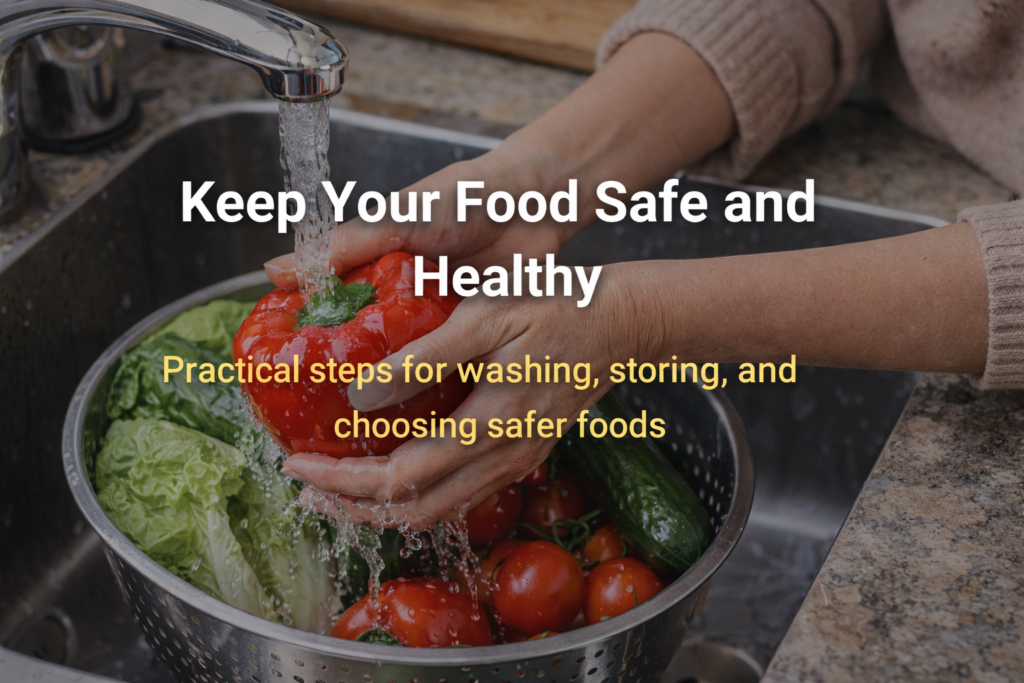
Wash fruits and vegetables properly
Even organic produce should be washed.
Best practices:
- rinse under running water
- gently scrub the surface
- remove outer leaves (lettuce, cabbage)
⚠️ Avoid soap or chemical cleaners.
Choose organic foods when possible
If you can’t buy everything organic, prioritize organic options for:
- apples
- strawberries
- grapes
- tomatoes
- spinach
These foods tend to contain higher pesticide residues.
Store and Handle Food Safely
Poor food storage can lead to foodborne illnesses.
Basic food safety rules:
- keep cold foods refrigerated
- never refreeze thawed food
- store leftovers for no more than 48 hours
- cook meat, eggs, and fish thoroughly
👉 Food poisoning can weaken the immune system significantly.
Strengthen Your Body with Protective Foods
Foods that naturally support health
Include regularly:
- garlic and onions
- ginger
- lemon
- leafy green vegetables
- vitamin C–rich fruits
- natural yogurt (probiotics)
These foods help:
- support immune defenses
- reduce inflammation
- improve digestion
Learn to Read Food Labels
Always check:
- ingredient lists
- sugar content
- salt (sodium) levels
- saturated fats
A simple tip:
👉 If you can’t pronounce or understand an ingredient, your body may struggle with it too.
Adapting Your Diet During Uncertain Times
During periods of stress or uncertainty:
- eat simple, balanced meals
- limit alcohol consumption
- drink enough water
- keep regular meal times
A stable diet also supports mental well-being.
Common Mistakes to Avoid
- relying on sugary foods for energy
- skipping meals
- following extreme diets
- believing in “miracle” solutions
Long-term protection comes from consistency, not extremes.
Conclusion
Protecting yourself through food doesn’t require complicated rules. By choosing whole foods, limiting processed products, handling food safely, and listening to your body, you can reduce risks and support your health naturally—today and in the future.
FAQ – Frequently Asked Questions
What foods should I avoid first?
Ultra-processed foods high in sugar, salt, and additives.
Is organic food necessary?
Not mandatory, but it can reduce exposure to pesticides.
How can food help protect the immune system?
Nutrient-rich foods support immune function and reduce inflammation.
Does drinking water help detox the body?
Proper hydration helps the body eliminate waste naturally.
Medical Disclaimer
This article is for informational purposes only and does not replace professional medical advice. Always consult a qualified healthcare provider for personalized guidance.
Be First to Comment